

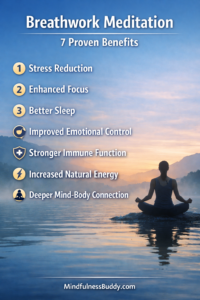
Breathwork Meditation: 7 Proven Benefits That Will Transform Your Daily Practice
Breathwork meditation is rapidly becoming one of the most popular wellness practices in the world today. Millions of people are turning to this ancient yet scientifically validated technique to manage stress, sharpen mental clarity, and unlock deeper states of relaxation. Unlike passive forms of sitting quietly, this approach actively engages your respiratory system to trigger powerful physiological and psychological changes that ripple across every area of your life.
Whether you are a complete beginner or a seasoned practitioner, understanding the science and structure behind conscious breathing can help you get far more out of every session. In this comprehensive guide, we explore seven research-backed benefits, practical techniques you can try today, and tips for building a sustainable daily routine that sticks.
What Is Breathwork Meditation and How Does It Work?
At its core, this practice combines deliberate breathing patterns with focused awareness. Practitioners use specific rhythms of inhalation, retention, and exhalation to influence the autonomic nervous system. This process shifts the body from a sympathetic “fight or flight” state into a parasympathetic “rest and digest” mode, creating measurable changes in brain chemistry and hormone levels almost immediately.
Common styles include box breathing, the 4-7-8 technique, holotropic breathwork, and pranayama-based methods drawn from yogic tradition. Each style offers a slightly different pathway, but all share the central principle of using the breath as an anchor for present-moment attention and awareness. According to research published by the National Institutes of Health, controlled breathing interventions show measurable reductions in cortisol and inflammatory markers across diverse populations.
Benefit 1: Significant Stress and Anxiety Reduction
One of the most well-documented advantages of breathwork meditation is its ability to lower stress hormones rapidly and reliably. When you slow your breathing rate to approximately six breaths per minute, your vagus nerve activates a calming cascade throughout the body. Heart rate decreases, blood pressure drops, and cortisol levels fall measurably within just a few minutes of practice.
A 2023 Stanford University study found that cyclic sighing, a specific conscious breathing technique, outperformed traditional mindfulness in reducing self-reported anxiety among participants. Subjects practiced for just five minutes per day over a four-week period and reported lasting improvements in their overall stress levels and emotional wellbeing throughout the entire duration of the study.
Benefit 2: Enhanced Focus and Cognitive Performance
Deliberate breathing practices directly improve attention span, working memory, and the ability to sustain concentration during demanding tasks. By increasing oxygen delivery to the prefrontal cortex, controlled breathing patterns enhance the neural circuits responsible for executive function, planning, and complex decision-making. Students, professionals, and athletes all report sharper cognitive performance after consistent daily practice.
Research from Trinity College Dublin demonstrated that participants who engaged in focused breathing exercises showed significantly stronger connectivity between attention networks in the brain compared to control groups. The findings suggest that these practices physically rewire your brain for better concentration, not just in the moment but over the long term as neural pathways strengthen through repetition.
Benefit 3: Better Sleep Quality
Struggling with insomnia or restless nights is an increasingly common problem in our always-connected modern world. Practicing conscious breathing techniques before bed can be remarkably effective at calming a racing mind. The 4-7-8 technique, where you inhale for four counts, hold for seven, and exhale slowly for eight, activates your parasympathetic nervous system and systematically prepares both your body and mind for deep, restorative sleep.
Clinical trials have shown that participants who added a ten-minute breathing routine before bedtime fell asleep 42 percent faster on average and experienced significantly fewer nighttime awakenings compared to control groups. This makes the practice a compelling drug-free alternative for anyone seeking better rest without pharmaceutical side effects or dependency concerns.
Benefit 4: Improved Emotional Regulation
Regular practice strengthens the neural connection between your prefrontal cortex and amygdala, the brain regions responsible for rational thinking and emotional processing respectively. This strengthened pathway is critical for managing emotional responses effectively in high-pressure situations. Over time, dedicated practitioners develop a noticeably greater capacity to observe their feelings without being overwhelmed or hijacked by intense emotions.
Therapists and psychologists increasingly recommend breathwork meditation as a complementary therapeutic tool for managing depression, grief, anxiety disorders, and general emotional volatility. The practice creates a reliable internal pause between stimulus and response, giving you the valuable space needed to consciously choose how you react to challenging circumstances rather than operating on autopilot.
Benefit 5: Stronger Immune System Function
Emerging research from several major universities suggests that consistent breathing practices may significantly enhance immune system function and resilience. The famous Wim Hof Method studies demonstrated that trained practitioners could voluntarily influence their innate immune response, something scientists had previously considered biologically impossible for humans to achieve consciously.
By reducing chronic stress hormones and lowering systemic inflammation throughout the body, these techniques create an internal environment where the immune system can operate more efficiently and effectively. While more large-scale randomized controlled studies are needed, early results from peer-reviewed journals are highly promising for anyone seeking natural, evidence-based ways to support their overall health and disease resistance.
Benefit 6: Increased Energy Without Stimulants
Many people rely heavily on caffeine and energy drinks to power through afternoon slumps and maintain productivity, but conscious breathing practices offer a genuinely sustainable alternative without negative side effects. Techniques like Kapalabhati, often called “skull-shining breath” in yogic traditions, rapidly increase oxygen saturation levels throughout the bloodstream and stimulate the sympathetic nervous system in a controlled, beneficial, and non-addictive way.
A five-minute energizing session can boost mental alertness comparably to a strong cup of coffee, without the accompanying jitters, energy crashes, or nighttime sleep disruption that caffeine commonly causes. Many practitioners describe feeling a clean, centered, and sustained energy that lasts for several hours after completing a single session, making it an ideal midday reset tool.
Benefit 7: Deeper Mind-Body Connection
Perhaps the most profound long-term benefit of breathwork meditation is the enhanced awareness it cultivates between mind and body over weeks and months of consistent practice. By paying close attention to the physical sensations of each inhale and exhale, practitioners develop interoception, which is the ability to accurately sense and interpret internal bodily signals that most people habitually ignore.
This heightened somatic awareness translates into tangible everyday improvements including better posture habits, improved digestion awareness, earlier detection of stress signals before they escalate, and a more intuitive relationship with your own physical and emotional needs. Many dedicated practitioners report feeling genuinely at home in their bodies for the first time in their adult lives, describing a sense of integration they had never previously experienced.
How to Start Your Practice Today
Beginning a daily routine with conscious breathing is simpler than most people expect. Start with just five minutes per day using one of the beginner-friendly approaches described above. Find a quiet space where you can sit or lie down comfortably without interruption, close your eyes, and take three natural breaths to settle your attention inward.
Consistency matters significantly more than session duration. Five minutes of daily practice will produce substantially better results than thirty minutes performed sporadically once a week. Consider tracking your sessions in a journal, noting your mood, energy level, and mental clarity both before and after each practice to observe patterns over time.
As you progress and develop confidence, explore guided group sessions through specialized apps, local studios, or community classes. Many experienced practitioners find that group breathwork meditation sessions deepen their experience considerably and provides valuable community support and accountability that sustains long-term commitment.
Common Mistakes to Avoid
Beginners sometimes force their breathing too aggressively in an effort to feel immediate results, which can cause lightheadedness, tingling, or mild hyperventilation symptoms. Always prioritize gentle, controlled, and comfortable rhythms over intensity or speed. If you feel dizzy or uncomfortable at any point during a session, simply return to your natural breathing pattern immediately and rest until you feel normal again.
Another common error is expecting dramatic overnight transformation from a practice that rewards patience and gradual accumulation. Like learning any meaningful skill, conscious breathing yields its deepest and most lasting rewards through patient, regular, and committed daily practice sustained over weeks and months. Give yourself at least three to four weeks of consistent daily sessions before attempting to evaluate your results or progress.
Final Thoughts on Building a Lasting Practice
Breathwork meditation stands at the powerful intersection of ancient contemplative wisdom and modern neuroscience research. With seven compelling benefits ranging from immediate stress reduction to long-term immune system support, the scientific evidence for incorporating this practice into your daily life is substantial and growing rapidly. Start small today, stay consistent through the inevitable ups and downs, and let your breath guide you steadily toward a calmer, more focused, and fundamentally more resilient version of yourself.