


We live in a culture that celebrates relentless self-criticism. From childhood, many of us learn that being hard on ourselves is the path to achievement and success. Yet decades of psychological research tell a very different story. Self-compassion, the practice of treating yourself with the same warmth and understanding you would offer a close friend, is one of the most transformative skills you can develop for your mental and emotional well-being.
In this comprehensive guide, you will learn what self-compassion truly means, why it matters for your health and relationships, and seven evidence-based strategies you can start using today to build a kinder relationship with yourself.
What Is Self-Compassion and Why Does It Matter?
Dr. Kristin Neff, a pioneering researcher at the University of Texas at Austin, defines self-compassion through three interconnected components. The first is self-kindness, which means choosing warmth over harsh judgment when you encounter personal failures. The second is common humanity, the recognition that suffering and imperfection are shared human experiences rather than isolating events. The third is mindfulness, which involves holding painful thoughts and feelings in balanced awareness rather than suppressing or exaggerating them.
Research published in journals such as the Journal of Personality and Social Psychology shows that individuals who practice self-compassion experience lower levels of anxiety, depression, and stress. They also demonstrate greater emotional resilience, stronger motivation after setbacks, and improved relationship satisfaction. Understanding these benefits makes a compelling case for prioritizing this skill in daily life. You can explore the research further at self-compassion.org.
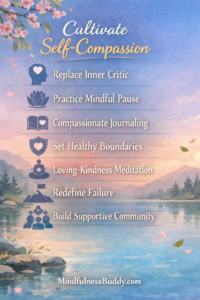
1. Replace Your Inner Critic With a Kinder Dialogue
The first step toward building self-compassion is noticing your inner critic. Most people carry a running internal monologue that judges, blames, and catastrophizes. When you catch yourself spiraling into harsh self-talk, pause and ask a simple question: would I say this to someone I love?
Reframe your words deliberately. Instead of telling yourself you are stupid for making a mistake, try saying that mistakes are part of being human. This is not about ignoring your flaws. Rather, it is about addressing them from a place of care rather than cruelty.
2. Practice the Mindful Pause Break Daily
Dr. Neff developed a short exercise called the mindful pause break that takes less than two minutes. Whenever you notice emotional pain, follow three steps. First, acknowledge that this moment is difficult. Second, remind yourself that struggle is a normal part of life. Third, place your hands over your heart and offer yourself words of kindness.
This brief ritual activates the parasympathetic nervous system, lowering cortisol levels and calming the body’s stress response. Practicing it consistently rewires habitual patterns of self-blame into healthier responses.
3. Use Journaling to Strengthen Your Inner Voice
Writing is one of the most accessible tools for developing a kinder inner voice. Spend ten minutes each evening reflecting on a difficult moment from your day. Describe what happened without judgment. Then write a short paragraph responding to yourself as a compassionate friend would.
Over weeks, this journaling practice builds a written record of your growth. You begin to see recurring patterns of self-criticism and gradually replace them with more balanced perspectives.
4. Set Boundaries as an Act of Kindness Toward Yourself
Many people associate compassion exclusively with being gentle and soft. In reality, self-compassion sometimes requires fierce action. Setting boundaries at work, in friendships, and in family dynamics is a direct expression of self-worth.
When you say no to demands that drain you, you send a clear message to yourself that your needs matter. This form of caring for yourself protects your energy, prevents burnout, and allows you to show up more fully in the areas of life that truly align with your values.
How Self-Compassion Improves Physical Health
The benefits of self-compassion extend well beyond emotional well-being. Studies from the University of Exeter found that participants who practiced compassion-focused exercises showed reduced heart rates and lower inflammatory markers. Chronic self-criticism activates the body’s threat system, flooding the bloodstream with stress hormones.
By shifting from self-attack to self-support, you can reduce this physiological burden. People who score higher on these scales also tend to engage in healthier behaviors such as regular exercise, balanced nutrition, and consistent sleep routines. The connection between emotional kindness and physical wellness is well documented and continues to attract attention from researchers worldwide.
5. Try Loving-Kindness Meditation for Emotional Healing
Loving-kindness meditation, also known as metta meditation, is a structured practice for cultivating warmth toward yourself and others. Begin by sitting comfortably and silently repeating phrases such as “may I be happy, may I be healthy, may I live with ease.” Gradually extend these wishes outward to loved ones, acquaintances, and even people you find difficult.
Research from Stanford University’s Center for Compassion and Altruism shows that just eight weeks of loving-kindness practice increases positive emotions and reduces symptoms of depression. The key is consistency rather than perfection. Even five minutes a day creates measurable change over time.
6. Redefine Failure Through Gentle Understanding
High achievers often struggle most with this practice because they equate self-criticism with motivation. However, studies consistently show that people who respond to failure with kindness toward themselves are actually more likely to try again. They experience less fear of failure, which frees them to take healthy risks.
Next time a project falls short or a goal slips away, try viewing the experience through the lens of common humanity. Remind yourself that every successful person you admire has faced similar setbacks. Failure is not evidence of inadequacy. It is simply information that guides your next attempt.
7. Build Your Practice With Community Support
Developing this skill does not have to be a solitary journey. Joining a mindful self-compassion group, attending workshops, or simply sharing your intentions with a trusted friend creates accountability and normalizes the process. Community reinforces the common humanity pillar by reminding you that everyone struggles with self-judgment.
Online programs, therapy groups, and even book clubs focused on works by Neff and Christopher Germer provide structured pathways for sustained growth.
Common Misconceptions About Self-Compassion
Critics sometimes argue that this approach encourages laziness or self-indulgence. Research directly contradicts this claim. Self-compassionate individuals hold themselves to high standards, but they do not collapse under shame when they fall short. They demonstrate greater personal accountability, not less, because they are not paralyzed by the fear of harsh self-punishment.
Another misconception is that treating yourself gently is selfish. In truth, people who care for their own emotional needs have more capacity to care for others. Flight attendants have always offered the right metaphor: secure your own oxygen mask before helping those around you.
Taking the First Step Today
Building self-compassion is a lifelong practice, not a one-time event. Start with a single strategy from this guide and commit to it for two weeks. Notice how your internal dialogue shifts. Pay attention to how your body feels when you choose kindness over criticism. Track your progress in a journal or share your experience with a friend who supports your growth.
The path toward self-compassion does not demand perfection. It simply asks you to begin treating yourself with the same decency and care you already extend to the people you love. That small shift can reshape your entire experience of being alive. Remember that every moment of awareness is an opportunity to choose understanding over judgment, and warmth over harshness.